Cat-Eye Glasses: Retro Roots, Modern Style
February 25, 2026
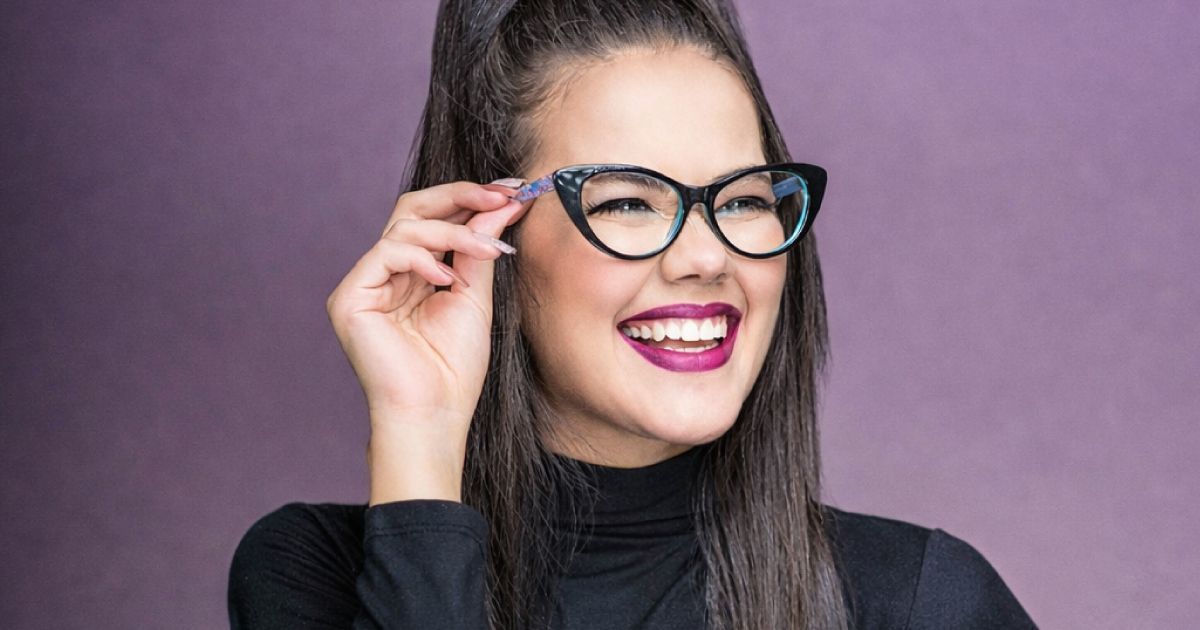
Woman with cat-eye glasses, smiling, touching frame. Purple background.

Read time: 6 minutes


Cat-eye frames have never really disappeared. They just keep changing to suit the times. From vintage Hollywood glam to bold, modern styles, this frame shape continues to hold its place on faces around the world. And in a city like San Diego, where fashion is as laid-back as it is expressive, cat-eye glasses offer a unique mix of personality and polish.


Fashion trends come and go, but the sharp lift and unmistakable curve of a cat-eye have stayed strong. That's in part because designers constantly rework the shape using fresh ideas in materials and finishes. These modern versions, especially within luxury designer eyewear, bring in new colors, angles, and sizes without losing the original charm. Let's take a closer look at how this classic shape got its start, how it faded for a while, and why it's back with even more character today.


Vintage Beginnings: The Rise of Cat-Eye Frames in the 1950s and 1960s


The story of the cat-eye starts with the golden age of Hollywood. In the 1950s and 60s, bold fashion was starting to move into everyday life, and eye-catching glasses were part of the fun. Cat-eye frames, with their upward corners and sculpted details, stood out from the rounder shapes that came before. Worn by movie stars like Audrey Hepburn and Marilyn Monroe, cat-eyes became symbols of confidence and individuality.


These early frames weren't just about looks. They were built to show personality in a time when several styles felt rigid or traditional. The shapes often featured ornate details, with designs engraved along the edge or bits of sparkle added to the tips. They gave wearers something different, something with edge and elegance at the same time.


Many people found that this type of frame added interest to their face while drawing attention to the eyes. The upswept angles made the cheeks and jawline pop, which made them especially flattering on a wide range of face shapes. Over time, they became more than a trend. They became a statement.


The Quiet Years and the Comeback


Fashion shifted in the 1980s and 90s toward minimal shapes and lighter designs, and cat-eye frames took a back seat for a while. Oversized squares and sleek metal frames seemed to take over, leaving less room for styles with bolder personality. But fashion doesn't forget. And it didn't take long for designers to glance backward again.


In the early 2000s, a fresh wave of interest in retro and vintage clothing started to make its way into mainstream eyewear. Frame designers saw how the classic look of cat-eye glasses could be adjusted to suit newer tastes. The lines were softened or stretched, color choices expanded, and nods to the past turned into full-on fashion statements.


What helped push the comeback forward was the return of high-quality frame materials. Instead of basic plastic, cat-eye styles were getting upgrades with rich acetates and metals that felt as good as they looked. That shift meant modern versions were stylish and durable too. And with more face sizes and shapes being considered, people found designs that fit them better than ever before.


Today's Bold Interpretations


Today's cat-eye glasses are often bigger, bolder, and more sculpted than the frames worn decades ago. The basic shape has stayed the same, but the rules have disappeared. Designers are playing with sharp points, deeper lenses, and even geometric curves that feel more like art than anything else.


Materials like milled metals and sculptural acetate let these frames take on new roles. We've seen cat-eyes with chunky, thick frames in bright colors, or others made slim with sharp angles for a sleek, modern edge. For those who lean toward expressive style, it's a fun and fearless choice.


Luxury designer eyewear has helped push cat-eye frames into unexpected places. Because quality is at the center of these frames, it gives designers more space to take visual risks. A good frame doesn't just hold lenses, it shapes how you show up in the world. Right now, cat-eyes are doing that with more variety than ever.


At Urban Optiks Optometry, many of our cat-eye frames are handcrafted in Europe, using high-grade acetates and titanium for a mix of standout style and comfort. Our boutique features exclusive collections from top designers, so you can find creative shapes and finishes that aren't available everywhere else.


Finding the Right Cat-Eye for Your Style


One of the best things about cat-eye glasses is how versatile they've become. Whether you like something soft or want something with sharp points, there's a style that can match your look and comfort needs.


  • If your taste leans classic, go for a smaller, curved frame with subtle angles.
  • If you love bold fashion, a super-oversized cat-eye with bright patterns could work well.
  • For people who prefer clean lines but still want some lift, a hybrid shape with only a gentle sweep at the edges could strike a perfect balance.


Not every cat-eye frame will feel perfect right away, which is why trying them on makes all the difference. Fit matters, especially around the nose and ears, and what looks great on a display might not sit quite right without a little adjusting. Opticians can help with that part, making sure you walk out with something that looks and feels just right.


Lenses have just as much impact as shape. Your prescription, your lifestyle, and how you plan to wear your glasses all play a role in finding what works. Some cat-eyes are better for single-vision lenses, while others hold progressive lenses better based on height and curvature.


Looking Back to Keep Moving Forward


Cat-eye frames keep going strong, not because they've stayed the same, but because they've kept changing in ways that work. Their roots are still visible, but every version adds a layer to the story.


Whether you're going for glamorous or playful, bold or understated, there's a cat-eye design that'll meet you there. That's part of why they've stuck around for so long. They make room for personality while offering structure and polish. In eyewear today, cat-eye glasses continue to show up in exciting new looks. They're a reminder that great design doesn't have to chase trends; it can help shape them.


Explore the world of luxury designer eyewear at Urban Optiks Optometry, where cat-eye glasses are crafted from the finest materials for both style and comfort. Our boutique collection will help you find a frame that seamlessly blends retro charm with modern innovation. Let us assist you in discovering the perfect pair of glasses that complements your style and enhances your personality. Schedule an appointment today to experience eyewear that sets new standards in design and craftsmanship.

Share this blog post on social or with a friend:

The information provided in this article is intended for general knowledge and educational purposes only and should not be construed as medical advice. It is strongly recommended to consult with an eye care professional for personalized recommendations and guidance regarding your individual needs and eye health concerns.


All of Urban Optiks Optometry's blog posts and articles contain information carefully curated from openly sourced materials available in the public domain. We strive to ensure the accuracy and relevance of the information provided. For a comprehensive understanding of our practices and to read our full disclosure statement, please click here.

OUR LATEST POSTS

Two people doing sit-ups on exercise mats in a grassy park, one smiling and the other holding a pose.
October 8, 2026
When can you walk, lift weights, swim, run, or return to sports after eye surgery or an injury? Learn why recovery timelines vary and what to ask your doctor.
Colored pencils beside a grid of bright paint swatches with glasses on a desk
October 3, 2026
You can have 20/20 vision and still have color vision deficiency. Learn why visual acuity and color perception measure different parts of your vision.
Woman gently holding and gazing at a baby in a soft, bright setting
September 28, 2026
Babies often begin life mildly farsighted, but their eyes change quickly. Find out how vision develops and when farsightedness may become a concern.
Close-up of a man winking his right eye with an agitated expression.
September 23, 2026
Eye twitching is usually harmless, but some patterns deserve attention. Explore common causes, ways to calm a twitch, and signs that need evaluation.
Two women resting their faces on their hands outdoors at sunset, with floating sphere graphics in the sky
September 18, 2026
Small choices now can shape your eye health for decades. Discover the habits that help reduce avoidable risks and protect your vision long term.
Person wearing round glasses and a mustard sweater smiling outdoors, adjusting their glasses.
September 13, 2026
Find out how the right luxury eyewear pairs bold fall style with everyday comfort for the shifting light and temps of San Diego, California.
Spiral staircase with ornate iron railings and a warm-lit central well, viewed from above
September 8, 2026
Learn how depth perception helps you judge distance, what allows us to see in three dimensions, and the eye conditions that can affect this essential visual skill.
Eye with color chart in a vision-testing lab and a monitor showing color patterns
September 3, 2026
Not all color vision tests are the same. Discover how advanced testing provides a more complete understanding of the way you perceive color.
Close-up blue eye centered between blue and brown molecular patterns on a pale background
August 29, 2026
Read time: 4 minutes Your body is home to trillions of microorganisms that live on the skin and in areas such as the gut, mouth, and eyes. When these microbial communities remain in balance, they help support normal function and comfort. When that balance shifts, a state known as dysbiosis can occur. Dysbiosis does not mean infection. Instead, it describes a change in the normal mix of microbes—such as when helpful organisms decrease, potentially harmful ones increase, or the normal composition and diversity of the microbial community changes. Research continues to explore how dysbiosis may affect different parts of the body, including the eyes. What Is Dysbiosis? Dysbiosis refers to an imbalance in the normal microbial community of a specific area of the body. It has been most widely studied in the gut, but scientists now recognize that dysbiosis can also occur on other body surfaces. Key points to understand: Dysbiosis is not a disease by itself. Many people have changes in their microbiome without developing symptoms, and researchers are still working to understand when these changes become clinically important. It may be associated with inflammation and irritation It can make tissues more vulnerable to symptoms or flare-ups It is influenced by environment, overall health, and daily habits Cleveland Clinic explains dysbiosis as an imbalance in the body’s normal microbial community , which may contribute to inflammation and symptoms. The Evolution of Our Understanding of Microbes For many years, microbes were viewed primarily as harmful invaders. Medical care focused on eliminating bacteria whenever possible, especially on sensitive tissues like the eyes. As research tools improved, scientists discovered that healthy tissues often host small, stable microbial populations. This shifted medical thinking. Instead of assuming that all microbes were harmful, modern research recognizes that balance matters more than complete elimination. Dysbiosis emerged as a concept to describe what can happen when that balance is disrupted. Dysbiosis and the Eye The surface of the eye is exposed to air, water, and touch every day, yet it usually remains healthy. This stability depends on tear film, immune defenses, and a carefully regulated microbial environment. When dysbiosis affects the eye, it may be associated with: Increased inflammation Reduced surface comfort Greater sensitivity or irritation A higher likelihood of surface-related conditions Dysbiosis does not automatically cause eye disease, but it may contribute to symptoms when combined with other factors. The American Academy of Ophthalmology notes that healthy eyes support a small, carefully regulated microbial population on the surface. Common Factors Linked to Dysbiosis Several everyday factors may be associated with microbial imbalance: Overuse of antibiotics Chronic inflammation Environmental stressors such as prolonged dryness Contact lens wear Certain medical conditions Poor eyelid hygiene Not everyone exposed to these factors develops symptoms. Individual immune response plays a significant role. Eyelid inflammation can also influence surface balance, as explained in our blepharitis resource. Dysbiosis and Dry Eye Dry eye disease is complex and influenced by multiple factors. Research suggests that changes in the eye’s surface environment - including microbial balance - may be associated with inflammation seen in dry eye. Dysbiosis may: Disrupt tear film stability Increase inflammatory signaling Contribute to ongoing surface irritation This helps explain why dry eye care often focuses on long-term surface health, rather than temporary lubrication alone. Supporting a Healthy Microbial Balance There is no direct way to “reset” the microbiome, but supportive habits can help maintain stability. Helpful practices include: Proper contact lens hygiene Avoiding unnecessary antibiotic use Managing dry eye early Keeping eyelids clean Attending regular eye exams These habits support overall ocular surface health, which in turn helps maintain the eye's natural microbial environment. The Takeaway Dysbiosis describes a shift in the body’s normal microbial balance, not an infection or a diagnosis on its own. On the eye’s surface, this imbalance may be associated with inflammation, irritation, and conditions like dry eye when combined with other factors such as environment, hygiene, or overall health. While research into dysbiosis continues to evolve, one principle is already clear: eye health depends on balance, not sterility. As science continues to expand understanding of microbial balance, thoughtful, preventive eyecare remains the most reliable way to protect long-term comfort and vision. At Urban Optiks Optometry, that approach emphasizes surface health, early evaluation, and habits that support the eye’s natural systems over time.
Man in a blue shirt pouring water on his face outdoors in bright sunlight
August 24, 2026
Learn how summer heat, sunshine, and dry air can affect contact lens comfort, plus practical tips to help keep your eyes healthy and your vision clear.
Two people doing sit-ups on exercise mats in a grassy park, one smiling and the other holding a pose.
October 8, 2026
When can you walk, lift weights, swim, run, or return to sports after eye surgery or an injury? Learn why recovery timelines vary and what to ask your doctor.
Colored pencils beside a grid of bright paint swatches with glasses on a desk
October 3, 2026
You can have 20/20 vision and still have color vision deficiency. Learn why visual acuity and color perception measure different parts of your vision.
Woman gently holding and gazing at a baby in a soft, bright setting
September 28, 2026
Babies often begin life mildly farsighted, but their eyes change quickly. Find out how vision develops and when farsightedness may become a concern.
Close-up of a man winking his right eye with an agitated expression.
September 23, 2026
Eye twitching is usually harmless, but some patterns deserve attention. Explore common causes, ways to calm a twitch, and signs that need evaluation.
Two women resting their faces on their hands outdoors at sunset, with floating sphere graphics in the sky
September 18, 2026
Small choices now can shape your eye health for decades. Discover the habits that help reduce avoidable risks and protect your vision long term.