When Style and Function Belong in the Same Pair
Read time: 7 minutes
Choosing new glasses should be an enjoyable experience, but with so many frame shapes, materials, lens designs, coatings, and prescription options available, finding the right combination can sometimes feel overwhelming. Some people begin by looking for a particular style, while others prioritize comfort, durability, or visual performance. In reality, the best eyewear brings all of these considerations together.
A beautiful frame loses some of its appeal if it constantly slides down your nose, while even the most advanced lenses may not feel like the right choice if you dislike how the glasses look. Great eyewear comes from finding the right balance between personal style, thoughtful design, proper fit, and lenses that support your everyday visual needs.
Style Starts With the Frame
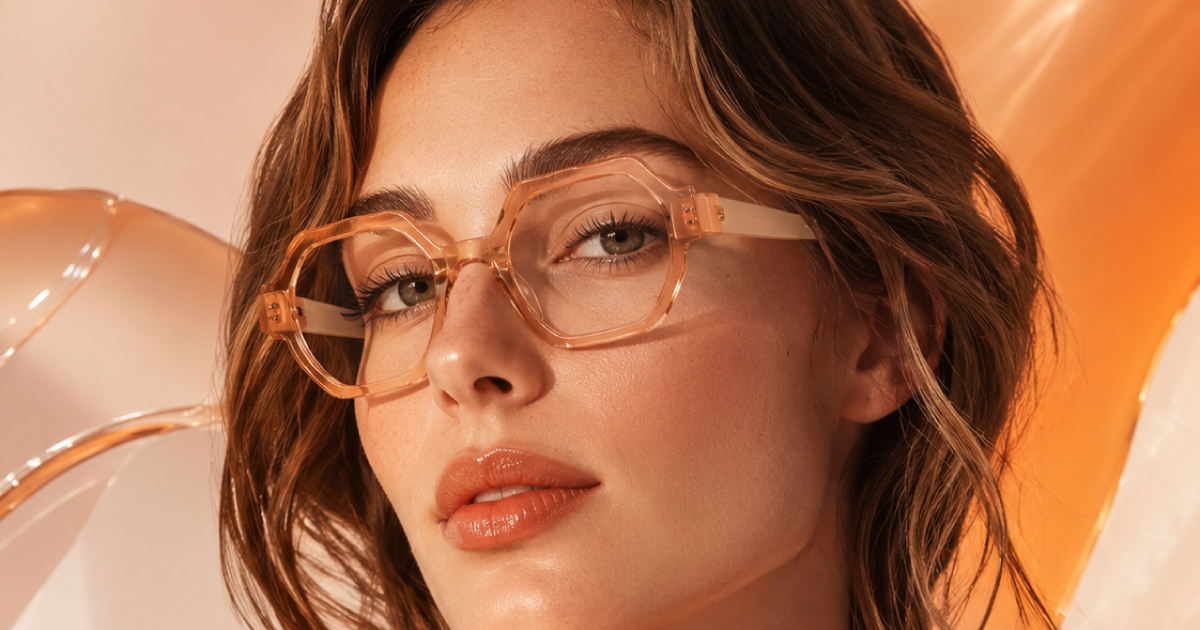
The frame is often the first thing people notice about a pair of glasses, and its shape, color, thickness, and finish can dramatically influence how it complements someone's appearance. Bold, architectural designs can make a distinctive statement, while lightweight metal frames may create a more understated, minimalist look. Colorful acetate, classic silhouettes, and contemporary combinations of materials offer even more opportunities for personal expression.
Finding the right style involves more than following current trends. Facial proportions, coloring, hairstyle, wardrobe, and individual preferences all contribute to how a frame looks and feels on the person wearing it. A design that looks remarkable on display may not have the same effect once it's on your face, which is why exploring different shapes and colors with the guidance of an experienced optician can be so valuable.
Ultimately, the goal is to select eyewear that feels like a natural extension of your personality while complementing your features and fitting comfortably into your daily life.
Materials Influence Both Appearance and Comfort
Frame materials play an important role in defining the character of eyewear, but their influence extends well beyond aesthetics. Acetate provides opportunities for rich colors, transparency, layered patterns, and sculptural shapes, while titanium and other metals can create refined profiles with a lighter visual appearance. Combination frames bring these materials together, introducing contrast, texture, and distinctive design details.
Material selection can also influence weight, flexibility, adjustability, and overall comfort. However, a substantial-looking frame is not necessarily heavy, and an exceptionally thin design does not automatically provide a better fit. The quality of construction, balance of the frame, and how it rests against the face are equally important considerations.
Lens materials deserve similar attention because their physical and optical properties influence the finished pair of glasses. As explained by the American Academy of Ophthalmology's EyeWiki, ophthalmic lens materials vary in refractive index, weight, optical characteristics, impact resistance, and ultraviolet absorption. These differences can affect lens thickness, durability, and suitability for a particular prescription.
Choosing the right materials for both the frame and lenses helps create eyewear that looks appealing without compromising practical performance.
Lens Design Should Reflect How You Live
While the frame determines much of how your glasses look and feel, the lenses are responsible for helping you see clearly and comfortably throughout the day. Your prescription establishes the optical correction you need, but it is only one part of determining which lens design will serve you best.
Someone who spends long hours working at a desktop computer may have very different visual demands from someone who frequently drives, reads, or moves between multiple working distances. Understanding those habits helps identify which lens designs and features will provide the greatest benefit.
Single-vision lenses may be appropriate for someone who needs correction at one primary distance, while progressive lenses provide multiple viewing zones without the visible lines found in traditional bifocals. Occupational lenses can be designed around specific working distances, and anti-fatigue lenses may provide additional support for certain near-vision activities. Photochromic lenses, prescription sunglasses, and polarized sun lenses can also address changing light conditions and outdoor visual needs.
Rather than selecting every available feature, the objective is to identify the options that meaningfully improve your everyday visual experience. At Urban Optiks Optometry, our approach to customized digital lenses considers the prescription alongside frame selection, individual measurements, and the visual demands of each person's lifestyle.
Why Proper Fit Matters as Much as Style
Even a beautifully designed frame with an accurate prescription can be uncomfortable or perform less effectively when it doesn't fit correctly. Bridge shape, temple length, frame width, and lens depth all contribute to how securely and comfortably glasses sit on the face. The position of the eyes within the lenses is equally important, particularly when selecting more sophisticated lens designs.
For progressive and other personalized lenses, precise measurements help position the optical zones where they are intended to be used. If a frame repeatedly slips down the nose or sits at an unsuitable angle, the wearer may not be looking through the optimal portion of the lenses. This can influence visual comfort and the overall experience of wearing the glasses.
Professional fitting is therefore much more than a finishing touch. An experienced optician considers the relationship between facial anatomy, frame construction, lens design, and wearing position to help ensure that the eyewear functions as intended. Small adjustments can make a meaningful difference in how glasses feel and perform throughout the day.
Choosing Lens Treatments That Serve a Purpose
Modern eyeglass lenses offer an impressive range of treatments and technologies, but understanding what each feature accomplishes is more important than simply adding upgrades.
A quality anti-reflective treatment, for example, is designed to reduce distracting reflections from the surfaces of eyeglass lenses. By allowing more light to pass through the lenses and reducing visible reflections, these coatings can improve lens appearance and contribute to more comfortable vision in certain lighting environments.
Anti-reflective treatments can be particularly beneficial during nighttime driving, office work, and daily activities involving multiple light sources. They also make the lenses appear more transparent, allowing others to see your eyes with fewer distracting reflections. ZEISS explains how its premium anti-reflective coatings address reflections from the front and back lens surfaces while improving light transmission.
However, not all glare comes from the same source, and different technologies address different visual challenges. Polarized sunglasses, for instance, can be particularly effective at reducing reflected outdoor glare from surfaces such as roads and water. An anti-reflective treatment serves a different purpose and cannot replace the benefits of polarization in those situations.
The same principle applies to other lens technologies. A premium progressive design may provide significant advantages for one person, while another may be better served by high-quality single-vision lenses with an excellent anti-reflective treatment. Someone who spends much of the day at a computer might benefit from a dedicated pair of occupational glasses, while frequent outdoor activities could make prescription sunwear a worthwhile addition.
The most effective approach is to evaluate lens features according to the way you actually use your eyes rather than assuming that more technology automatically means better eyewear.
Finding the Pair That Feels Right
There is an important difference between glasses that technically fit and glasses that genuinely feel right. The pair you reach for each morning should complement your appearance, remain comfortable throughout the day, and provide the visual performance you expect without requiring constant adjustments or unnecessary compromises.
Achieving that balance often involves considering several details together. A frame that looks excellent may need a different size or bridge design to achieve a more secure fit. A particular prescription may benefit from a different lens shape or material, while certain lifestyle demands could influence which lens treatments or designs make the most sense.
These are interconnected decisions, and addressing them together often produces a better result than selecting the frame and lenses independently. When everything works in harmony, the eyewear becomes a comfortable, dependable part of your everyday routine while still expressing your personal sense of style.
The Takeaway
Great eyewear is neither exclusively about fashion nor solely about optical technology. The most satisfying results come from balancing thoughtful frame design, quality materials, proper fit, prescription requirements, lens performance, and personal preferences.
At Urban Optiks Optometry, we approach eyewear as a complete experience, helping each person explore frames and lenses that complement one another while supporting their individual needs. Our goal is to bring together exceptional craftsmanship, personalized guidance, and advanced lens technology to create glasses that look as good as they perform.
Because when eyewear is chosen thoughtfully, looking good and seeing well should always go hand in hand.
Share this blog post on social or with a friend:
The information provided in this article is intended for general knowledge and educational purposes only and should not be construed as medical advice. It is strongly recommended to consult with an eye care professional for personalized recommendations and guidance regarding your individual needs and eye health concerns.
All of Urban Optiks Optometry's blog posts and articles contain information carefully curated from openly sourced materials available in the public domain. We strive to ensure the accuracy and relevance of the information provided. For a comprehensive understanding of our practices and to read our full disclosure statement, please click here.